 info@imagine-dsuk.com
 01772 428334


 Back to all blogs
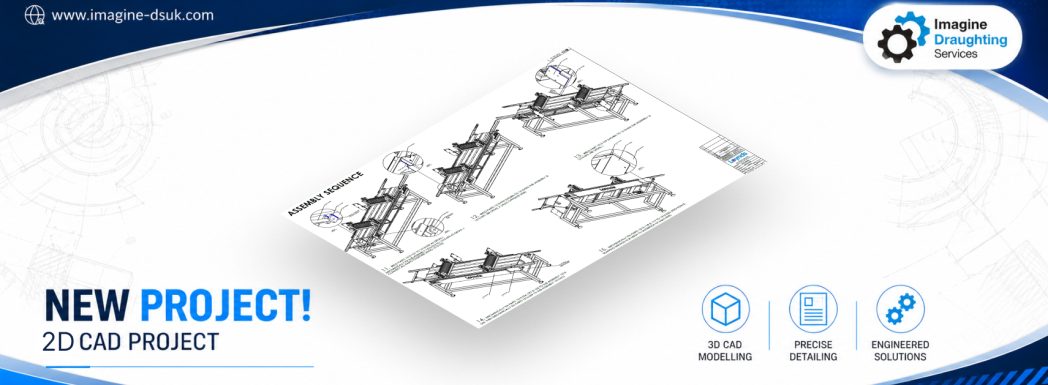


Reverse Engineering of Machinery: Fudge Cutter Assembly Drawings
For this project, Imagine Draughting Services used reverse engineering to document an existing fudge cutting machine. We produced a set of 2D CAD drawings showing how the machine fits together, how it is assembled and how the cutting arrangement differs between the 22 mm and 38 mm fudge sizes.
From an Existing Machine to a Drawing Set
A photograph can show what a machine looks like, but details such as mounting holes and how parts fit together are often easier to understand in a technical drawing. For the fudge cutter, the drawing set combined views of the machine with enlarged details and dimensioned drawings of individual components.
The assembly sheets show the machine at different stages, with detail views drawing attention to specific connections. Separate component drawings make it easier to locate dimensions and features such as holes and slots without searching through the full assembly.
Documenting Two Fudge Cutting Configurations
The drawing package includes details for two cutting configurations: 22 mm and 38 mm fudge. Showing each arrangement separately gives the reader a clear reference for the relevant setup.
This is a practical reason to document alternative configurations alongside the main assembly. A single overall view can explain how the machine fits together, while a separate detail can show what differs between versions.
When Is Reverse Engineering of Machinery Useful?
Reverse engineering can help when an existing machine is still in use but its drawings are missing, incomplete or difficult to follow. Depending on the scope, a CAD drawing package can document individual parts, explain the assembly sequence or give engineers a reference when planning future maintenance or modifications.
The most useful drawings start with a clear brief: which parts need to be documented, what the drawings will be used for and whether any alternative configurations need to be included.
Need 2D CAD Drawings for Existing Equipment?
If you need to document an existing machine, assembly or component, tell us what equipment you’re working with and what your team needs the drawings to show. Any existing drawings or photographs are a useful starting point.
Explore our 2D CAD services or email info@imagine-dsuk.com to discuss your project.
